
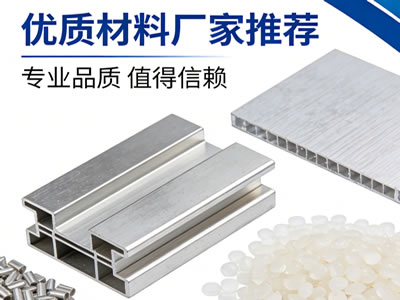
Recommended Material Manufacturers - Directory of Material Companies
Popularity index: Update time: 2026-02-23 Add to FavoritesRecommended Material Manufacturers

Jiangsu Changhai Composite Materials Holding Co., Ltd.
2025-12-07 950°C
Xiamen Hongcheng Composite Materials Co., LTD.
2025-11-03 855°C
Kangda New Materials (Group) Co., Ltd
2025-11-03 790°C
Shenzhen Sunbow Insulation Materials MFG. Co., Ltd.
2025-11-03 546°C
DPR New Materials Technology CO., LTD.
2025-11-03 618°C
Guangzhou Tinci Materials Technology Co., Ltd.
2025-11-03 710°C
Vital Thin Film Materials Co. Ltd
2025-11-03 890°C
Shijiazhuang Fubang Decoration Material Co., Ltd
2025-11-03 640°C
Haining Mingyuan Decorative Materials Co.,LTD. ,
2025-11-03 826°C
Yantai Tayho Advanced Materials Co.,Ltd.
2025-11-02 673°C
Materials are substances used by humans to manufacture objects, devices, or products. They can be classified into metal materials, inorganic non-metallic materials, organic polymer materials, and composite materials, and by application into categories such as electronic materials, aerospace materials, and biomaterials. As a pillar of civilization alongside information and energy, material development encompasses two main directions: structural materials and functional materials. In 2022, the China Association for Science and Technology identified the controllable removal of material surfaces at the atomic scale as a frontier scientific issue.
Material selection requires comprehensive consideration of physical properties, chemical stability, and environmental impact. Development directions include the optimization of traditional materials and the innovation of eco-friendly building materials. By 2025, the low-altitude economy is expected to drive the diversified development of engineering materials, promoting research and development of high-performance materials such as solid-state batteries and special engineering plastics, with the demand for new chemical materials expected to grow at an annual rate exceeding 8%. In 2025, Jiangsu Province recognized 33 first-batch new material products in fields including semiconductors and aerospace, addressing the issue of "materials available but not useful."
The application of nanomaterials in medical devices requires safety and efficacy assessment through a framework including physicochemical characterization and biological evaluation, with national standards defining their scale as 1-100 nanometers. Non-ferrous metal-based materials are used in biomedical applications such as bone implants, vascular stents, and tumor diagnosis and treatment, with titanium alloys and magnesium alloys undergoing surface treatment to improve performance.

Related Websites
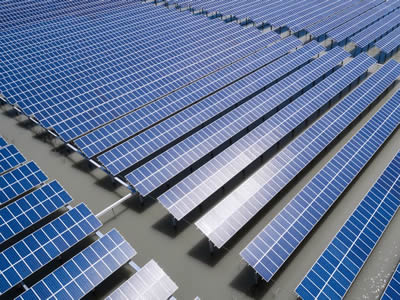
Complete Guide to Photovoltaic Companies - Recommended PV Manufacturers
Update time: 2026-02-23-
Recommended Material Manufacturers - Directory of Material Companies
Update time: 2026-02-23 
Mobile phone battery manufacturer - Top 10 Mobile Phone Battery Manufacturers
Update time: 2026-02-23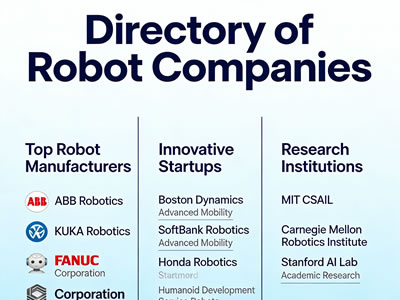
Directory of Robot Companies- Ranking of Chinese robot companies
Update time: 2026-02-23